Joey Morgan has developed public artworks and multi-disciplinary installations which have been shown in site specific contexts and gallery exhibitions in the United States, Australia, Denmark, France and across Canada. Exhibition venues include: Le Fresnoy in Tourcoing France; the Passerelle in Brest France; the National Gallery of Canada; the Power Plant in Toronto; the Musée d’Art Contemporain in Montréal; the Walter Phillips Gallery in Banff; and the Vancouver Art Gallery. She represented Canada in 1992 in the Sydney Biennial and 96 Containers in Copenhagen. She has been awarded artist in residence at the Cité Des Arts in Paris, at Oud Amelisweerd in the Netherlands, at Strokestown House in Ireland, and Studio PASS in New York. Parallel bookworks and other editioned works have been published to accompany major projects. Lectures and workshops at universities and art schools include: the Bauhaus University in Weimar; the Academie du Art/ Rotterdam and Aki, Enschede, the Netherlands; NSCAD University, Nova Scotia and Emily Carr University in Vancouver Canada.
download pdf resumé
contact: joey [at] joeymorgan.ca
atelier Daigneault/Schofield, 2126 Rachel Street East, Montreal (2025)
(40 years in the making !)
(sound on?)
A multi-part installation, Catch + Release is comprised of: (1) a series of painting assemblages, primarily graphite, oil and powdered pigment on mylar (each approx 71 x 30 inches) attached by tiny magnets to iron frameworks (2 inches deep); and (2) a series of very short video vignettes –ad hoc assemblies of disparate images and narration. These two parts are introduced by a large video projection of a bonfire.
THE FIRE: In Vermont people designate a winter jacket to be worn to the bonfire; over the years the sparks burn holes. The warm embrace of a fire burning all night long, the violent pulse of flames, the scattering of ash, distant fires on the horizon approach – the mind wanders.
THE OBJECTS: Formal with the weight of the iron framework, they seem to have been placed a bit high on the wall. Bits of copper catch the light. The face can seem full of energy, like some piece of battered metal but strong, and then tentative and vulnerable–translucent in parts. There is tension as the magnets stretch the surface and hold one part to the other.
THE VIDEOS (Terms of Engagement - Catch+Release) Each begins with the same introduction (have I seen this before?) and spirals into a short burst of exploratory memory or obsessive thought. The space between image and text invites a further reckoning.
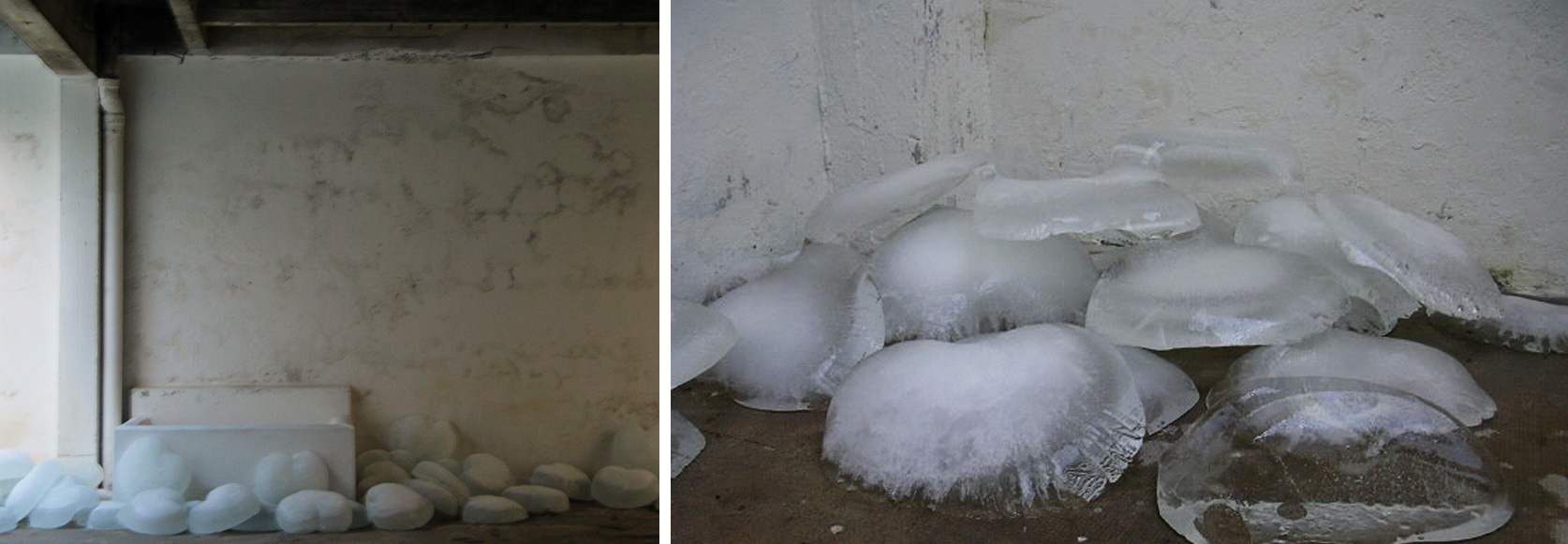
detail, installation view
Centre Passerelle, Brest France
Several hundred ice hearts were installed at Centre d’Art Paserrelle, Brest, France, soon melting into large pools of water throughout the space. Preparation, fabricating and storing the ice hearts had been ongoing for months before.
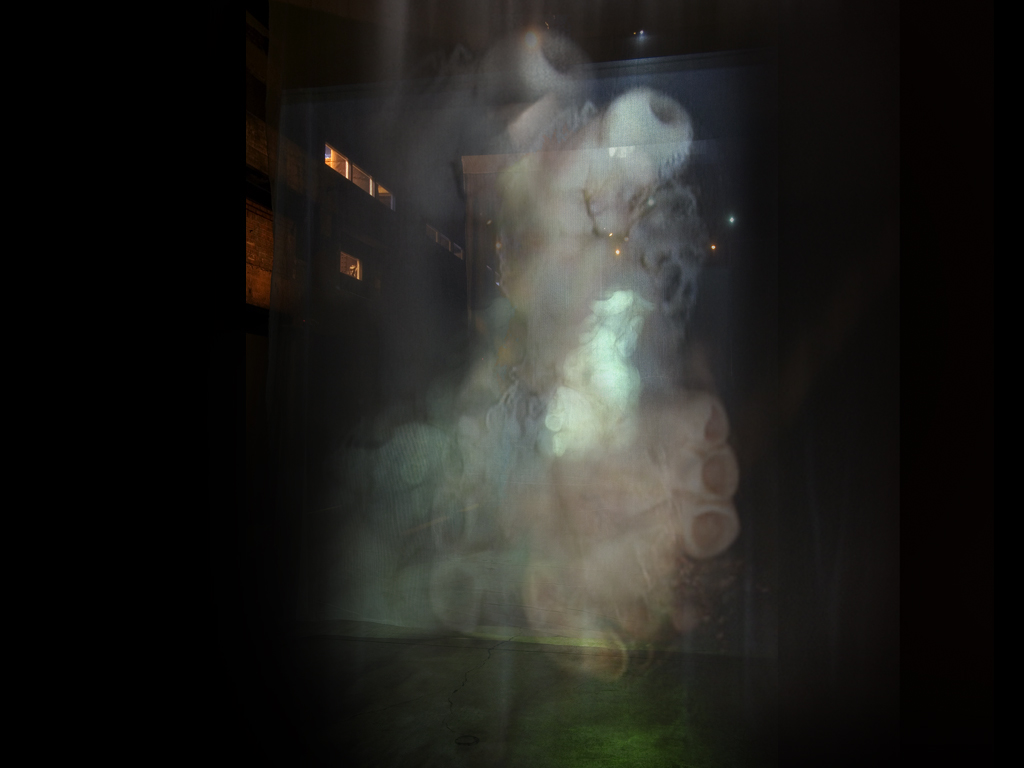
detail, installation view, Darling Foundry, Montreal QC Canada
Several scrims carry enormous video projections of a mutating heart while a soundwork combines Gregorian chant, fragments of narration, and pools of collected sound.
excerpt (sound on)
Originally installed on the unoccupied 31st floor of a Vancouver office tower, the piano soundboard was surrounded by broken keyboard pieces and shards of glass.
The audio piece begins with the final phrase of a Chopin nocturne followed by: the piano being slowly pried apart; the soundboard resonating underwater; a series of light arpeggios as rats ran across the strings; bell-like sounds as the piano was slowly heated by a propane bar followed by bright crackles and deep chords as the soundboard itself caught fire; and finally the explosion of a 357 magnum ripping through one of the strings. the source recordings were edited into a musical structure, and the final composition played back as a 15 minute recital.
Collection of Musee D'Art Contemporain,
Monteal QC Canada

detail, installation view,
University of Sherbrooke, QC Canada
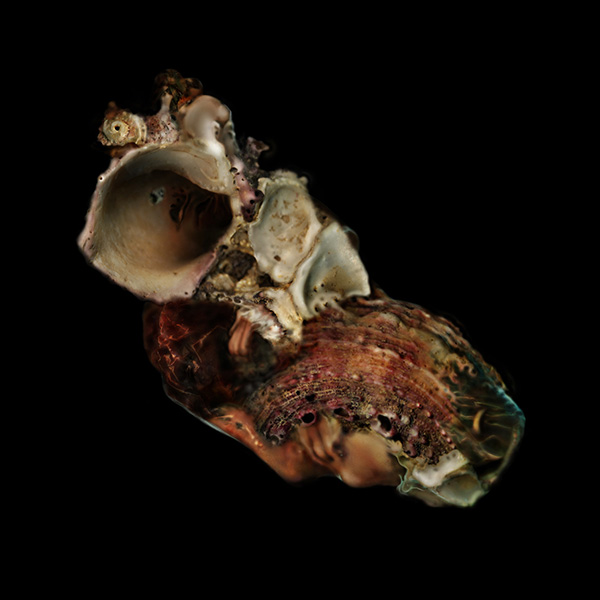
The works were first sculpted in clay, then scanned, covered with layers of digital painting, output as photographs framed and set in sequence on a red free-standing wall. Presented as formal portraits, they cross-reference Victorian mementos, medical specimens, and pixillated abstractions.
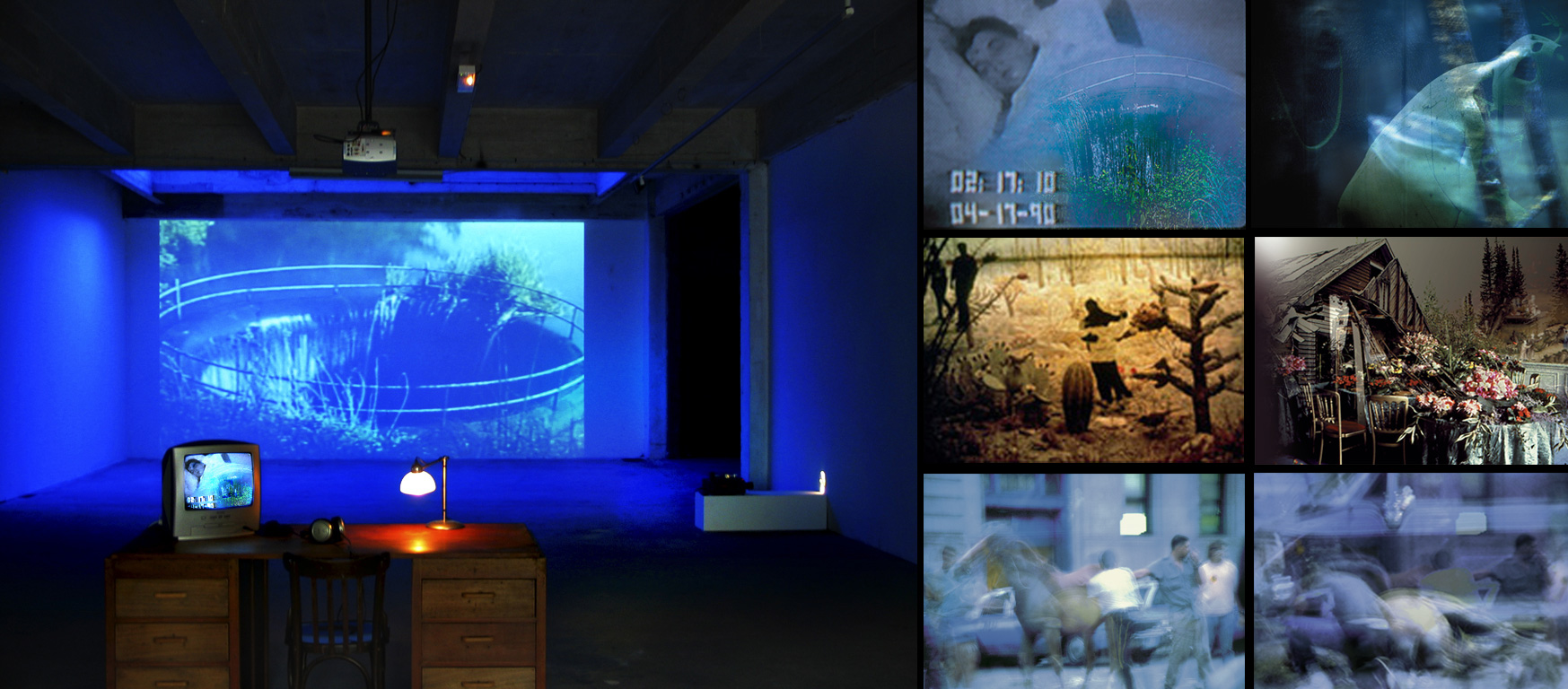
As the first awkward stories we tell our own selves, dreams are primary material of all narrative structures.
Drawing on observation techniques from a 19th century sleep disorders clinic, The Man Who Waits and Sleeps While I Dream poses an intense but unexpressed intimacy between a contemporary observer and her sleeping charge.
Funny, it still seems so intimate, all these nights watching him sleep. At first our awkwardness didn't surprise me but I expected by now - that the routine - but instead I’m so aware of how I’ve been looking forward to this all day and of how my own routine begins hours earlier, gathering together my data sheets, some reading material, a couple of sandwiches, a thermos of black coffee - choosing a sweater for when the heating cuts back later on, making sure I get my own sleep so I can be alert to watch his...